


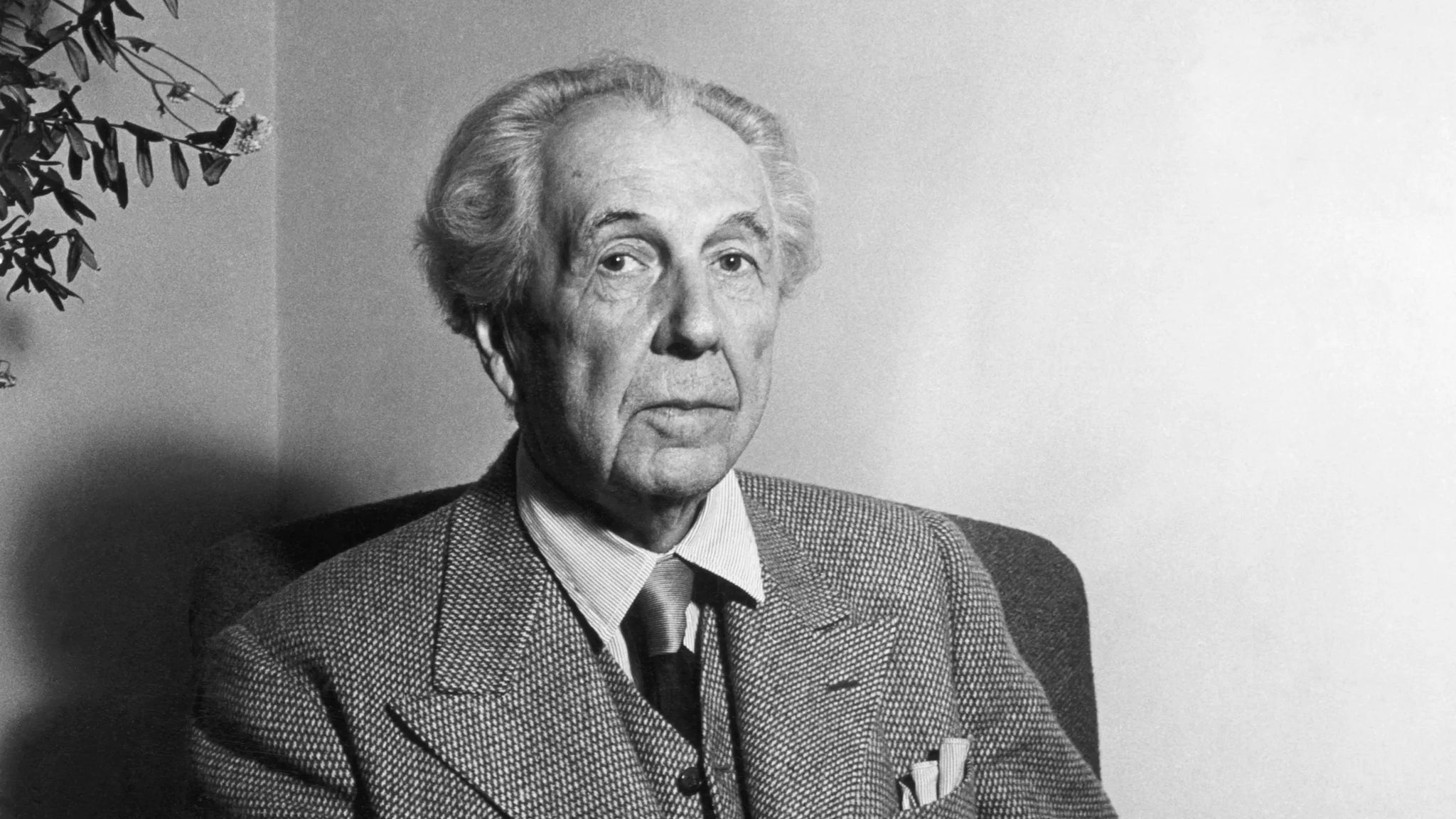
Over a 70-year career, Frank Lloyd Wright shaped the course of American architecture. Born in 1867 in Wisconsin, he trained in Chicago before establishing his own practice and developing the Prairie Style—defined by low roofs, wide overhangs and strong horizontal lines. After the Great Depression, Wright introduced his Usonian houses: smaller, more affordable homes designed for modern living. He designed more than 1,100 buildings, around half of which were built. Wright died in 1959 at the age of 91.
Wright designed countless masterpieces of architecture throughout his career...
Robie House (1909) — Chicago, Illinois
Taliesin (1911) — Spring Green, Wisconsin
Fallingwater (1935) — Mill Run, Pennsylvania
Johnson Wax Building (1936) — Racine, Wisconsin
Taliesin West (1937) — Scottsdale, Arizona
Solomon R. Guggenheim Museum (1956) — New York, New York
And of course, Kentuck Knob (1954) — Chalk Hill, Pennsylvania


Frank Lloyd Wright born in Wisconsin, 1867. His mother shaped his architectural path through education and Froebel Blocks.
After his parents' divorce, worked and studied at the University of Wisconsin. In 1887 he moved to Chicago and joined Adler and Sullivan.


Pioneering the Prairie style with low roofs, wide overhangs, and a horizontal emphasis.
In 1928, he established the Frank Lloyd Wright Foundation & Taliesin Fellowship. Taliesin West was an school & creative headquarters.
This era produced some of his most iconic works: Fallingwater, the S.C. Johnson Administration Building, and the first Usonian home — cementing his legacy as one of the world's greatest architects.
Due to the financial crisis of the Great Depression starting in 1929, Wright began designing smaller, affordable housing called Usonian houses. These designs were simple and more affordable for a post-WWII middle class economy, compared to Wright’s earlier Prairie style, while maintaing the elegance of his organic architecture. Usonians were typically one-level houses, with open living rooms, built-in furnishings, and a low-cantilevered roof. Only 60 Usonian homes were built, but the organic nature of the Usonian designs and the centralized elements of the archictecture influence the popular Ranch-style houses that popped up across the country in the 1950s.
Frank Lloyd Wright continued designing late into his life. His late-career designs included notable works such as the Beth Sholom Synagogue in Elkins Park Pennsylvania, The S.C. Johnson Headquarters in Racine, Wisconsin, and the Guggenheim Museum in New York. Frank Lloyd Wright died on April 9, 1959 at the age of 91.